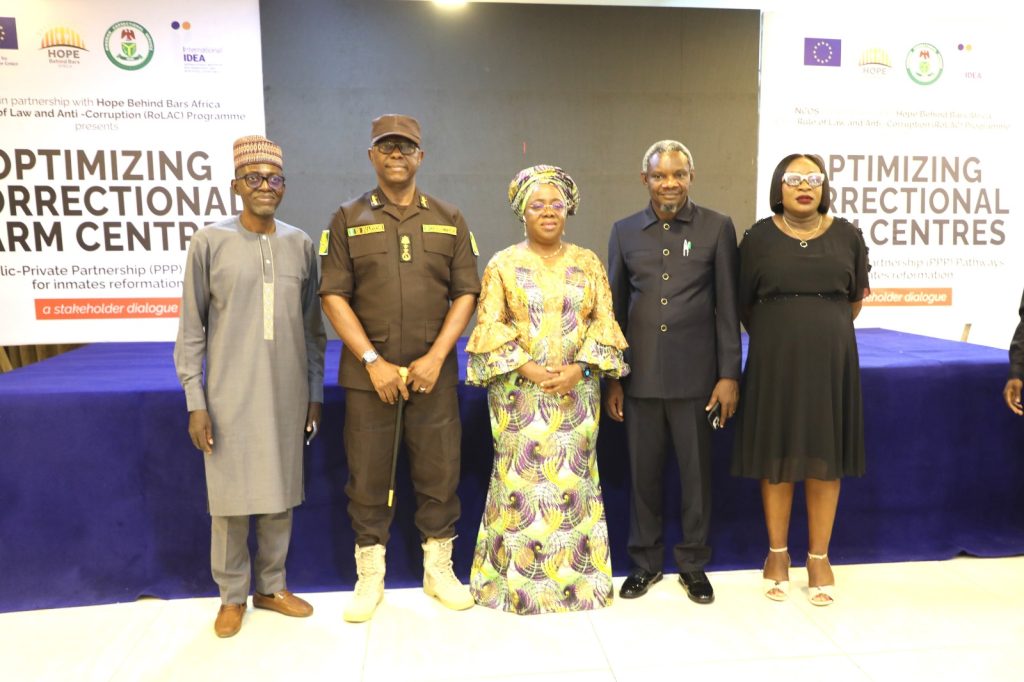
The Ministry of Interior has reaffirmed the Federal Government’s commitment to transforming Nigeria’s correctional system into a hub for rehabilitation, productivity, and national development through strategic Public-Private Partnerships (PPPs).
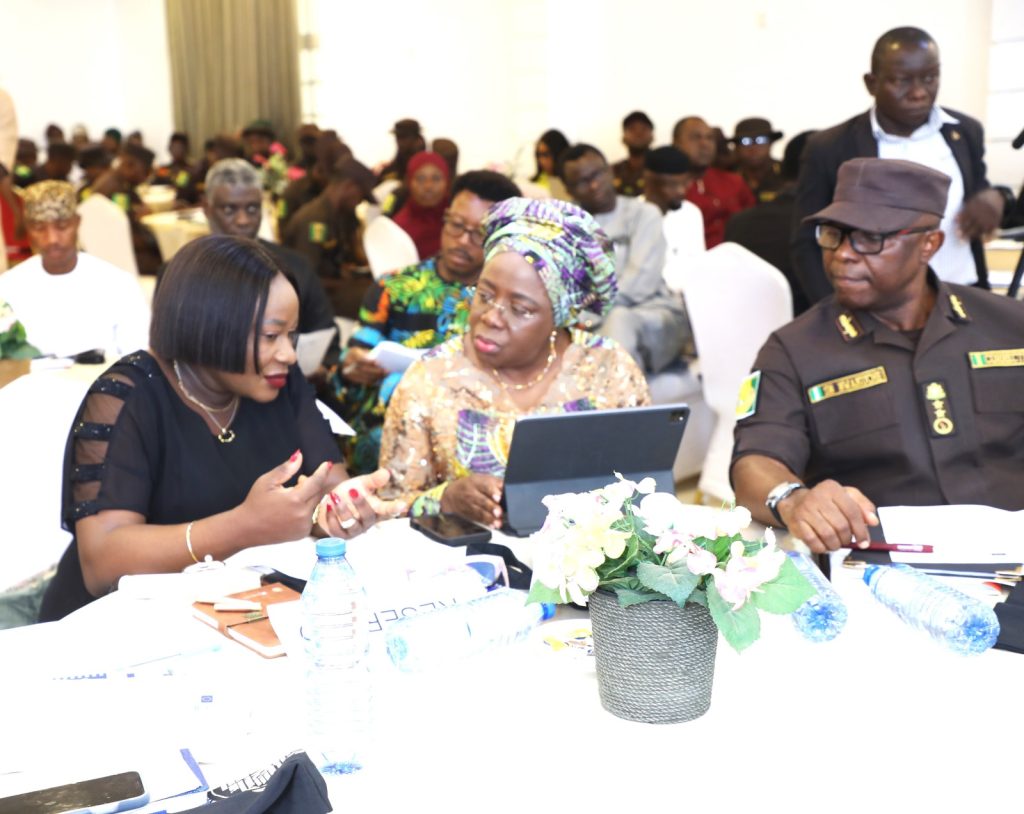
This position was highlighted during a stakeholders’ engagement on optimizing correctional farm centres, industries, and PPP pathways, convened in collaboration with key partners, including civil society and development organizations.
Representing the Honourable Minister of Interior, Dr. Olubunmi Tunji-Ojo, the Permanent Secretary, Dr. Magdalene Ajani emphasized that modern correctional systems must go beyond incarceration to focus on rehabilitation, skills acquisition, and reintegration.
He noted that the Ministry is committed to strengthening partnerships with organizations such as HOPE Behind Bars Africa and other stakeholders to expand ongoing interventions across correctional facilities nationwide.
According to him, “Correctional centres must evolve into institutions of transformation—where inmates are equipped with practical skills and opportunities that enable them to become productive members of society upon release.”
The Permanent Secretary highlighted the critical role of PPPs in achieving this vision, describing them as strategic tools for combining government oversight with private sector innovation, investment, and efficiency. He stressed that such collaborations would unlock the full potential of correctional farm centres and industries, particularly in agriculture and vocational training.
He further underscored that Nigeria’s correctional farm centres could be repositioned as centres of excellence in modern agriculture, agro-processing, and value-chain development—contributing not only to inmate rehabilitation but also to national food security and economic growth.
Also speaking at the event, the Controller-General of the Nigerian Correctional Service, Sylvester Ndidi Nwakuche, MFR, mni, reaffirmed the Service’s commitment to ongoing reforms aimed at repositioning correctional facilities as centres of reformation and reintegration.
He disclosed that the Service currently operates 18 farm centres and 10 cottage industries across the country, with extensive agricultural activities spanning crop production, livestock, fisheries, and poultry. These initiatives, he noted, serve as platforms for both inmate welfare and skills development.
The Controller-General emphasized that stronger collaboration with the private sector would enhance productivity, introduce modern techniques, and create sustainable value chains within correctional facilities.
Stakeholders at the engagement, including representatives from government, the private sector, development partners, and civil society organizations, collectively agreed on the need for actionable, scalable, and sustainable models that will drive real impact.
In his remarks, Honourable Chairman, House Committee on Reformatory Institutions, and Member representing Ikwo/Ezza-South Federal Constituency, Rt. Hon. (Comrade) Chinedu Ogah, OON called for greater accountability, innovation, and commitment in optimizing correctional farm centres. He stressed that agriculture remains a critical driver of economic growth and national security, urging stakeholders to move beyond dialogue to tangible implementation.
The engagement aligns with the broader reform agenda of the administration of President Bola Ahmed Tinubu, which prioritizes institutional strengthening, economic productivity, and sustainable development.
Participants were encouraged to leverage the platform to build partnerships that will transform correctional facilities into engines of productivity, reduce recidivism, and enhance community safety.
The Ministry reiterated that the success of correctional reform requires collective action, sustained investment, and a shared commitment to building a humane, efficient, and development-oriented system.
E-Signed
Mary Ali (Mrs)
Head, Press, and Public Relations
Ministry of Interior